Do this first
Book ahead, watch for Mondays, and learn one word: dashi
Book ahead
These sell out
- Ichigaya Letterpress Factory · The free 50-minute Printing Plant Tour runs on set days only. Book on the museum’s event page (it is in Japanese, so use your browser’s translate). Oedo line to Ushigome-kagurazaka, exit A1, then 10 minutes on foot.
- Nezu Museum · Book a time slot online.
- Shibuya Sky
- Ghibli Museum · Tickets go on sale on the 10th of the month before and sell out fast.
- teamLab Borderless
- Blue Note Tokyo
- Tofuya Ukai
- Daigo
Closing days
Most museums close on Mondays
Put Day 5, which is all streets and shops, on your Monday.
The letterpress factory (Day 1), 21_21 and the National Art Center (Day 4) and Ghibli also close on Tuesdays, so make a Tuesday Day 2 or Day 3.
Eating vegetarian
Every food stop is veggie or fish
Japan is harder for vegetarians than it looks, because fish stock (dashi) and meat stock hide in a lot of dishes. Eating some fish makes it far easier. How to order safely.
Getting around
Your base is perfect
The Godzilla Hotel (Hotel Gracery) is in Kabukicho, five minutes from Seibu-Shinjuku and ten from the JR east exit. Shinjuku is the world’s busiest station, and its lines reach everywhere in this guide.
Where everything is
Each day takes one slice of the loop
The green Yamanote line circles central Tokyo, and your hotel sits on its west side. Tap a dot to open that day.
The plan
Five days, numbered like metro stations
Every stop has a code, like Tokyo Metro’s station numbers: S03 is the third stop of the Shinjuku day. Tick stops off as you go; this phone remembers them.
Day 1 · 新宿 · Shinjuku
Towers, capsule toys, metal type and tiny bars
Shinjuku, plus two short hops on the metro: Ikebukuro for the world’s biggest capsule-toy shop, and Ichigaya for letterpress.
12 stops
-
· S01
Godzilla, and Kabukicho Tower
Hotel Gracery · Yuko Nagayama, 2023
Start on your doorstep. Godzilla glowers over the hotel terrace, and next door Nagayama’s tower wears a glass skin modelled on a splash of water.
Tip He roars and lights up now and then through the day. Watch from the street outside.
-
· S02
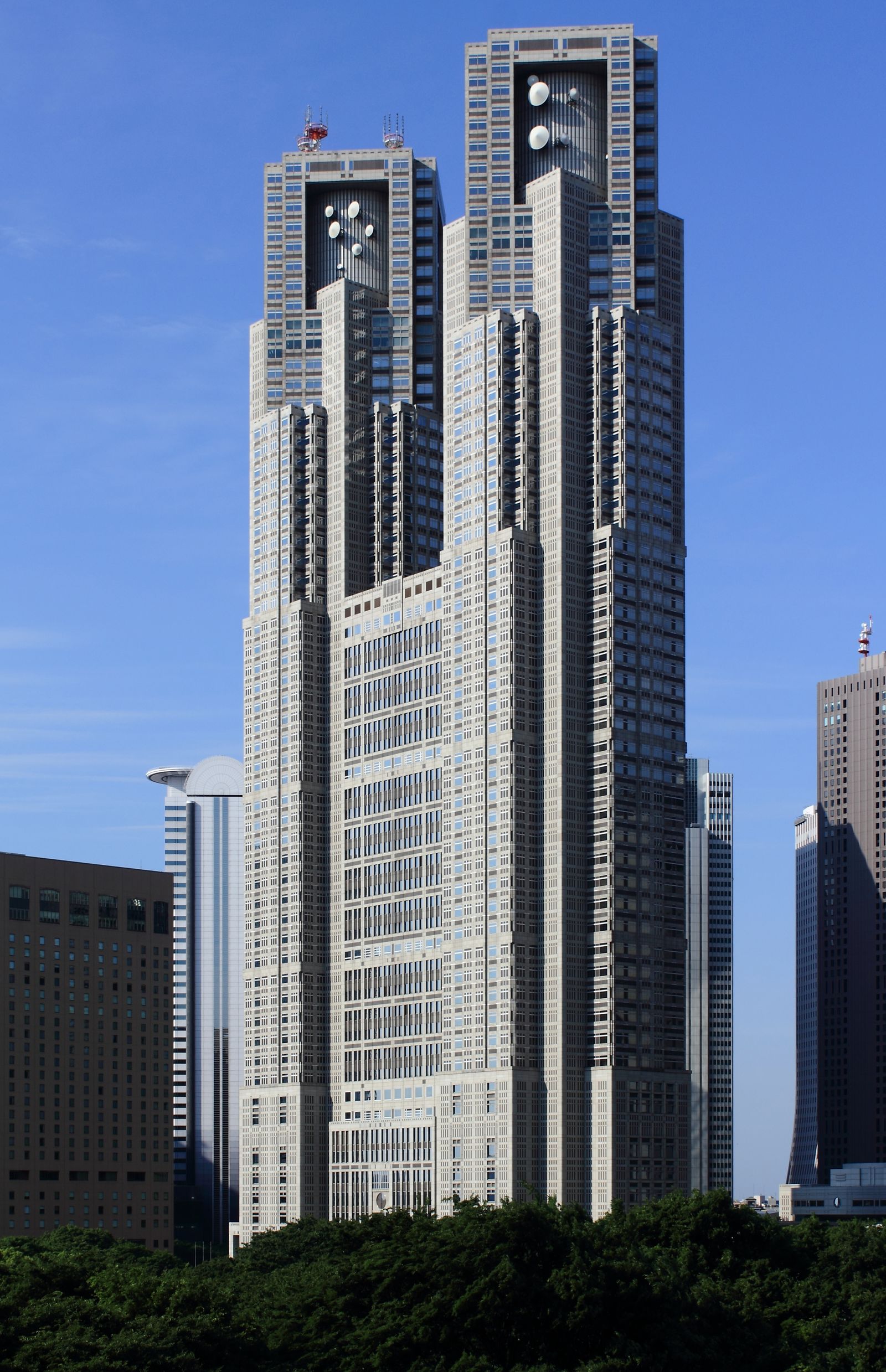
Tokyo Metropolitan Government Building
Kenzo Tange, 1991
Tange’s Gothic-cathedral city hall. The free observation deck on the 45th floor looks out to Mount Fuji on a clear morning.
Tip After dark, the facade is used as a projection-mapping screen. Come back one evening.
-
· S03
Mode Gakuen Cocoon Tower
Tange Associates, 2008
A fashion and design school wrapped in a crisscross white web. It is best seen from the foot of the tower, looking straight up.
-
· S04
Gashapon Department Store, Ikebukuro
Bandai Namco Cross Store Tokyo · Sunshine City
Guinness confirmed it in June 2026 as the world’s biggest capsule-toy shop: 4,096 machines, wall after wall. Bring a fistful of ¥100 coins (there are change machines).
Tip Yamanote line to Ikebukuro, 8 minutes, then a 10-minute walk east. Afterwards the Fukutoshin line runs straight back to Shinjuku-sanchome for lunch.
-
· S05
Ain Soph. Journey
Vegan · Shinjuku 3-chome
An all-vegan café near the garden gates, famous for its fluffy “heavenly” pancakes. An easy first meal.
Tip It gets busy at lunch. Go a little early or after 13:30.
-
· S06
Shinjuku Gyoen
National garden
French, English and Japanese gardens in one, plus a modern glass greenhouse. The best place to fight off jet lag on a bench.
-
· S07
Ichigaya Letterpress Factory
Dai Nippon Printing · building of 1926
DNP’s old print works, restored and full of working presses, cases of metal type and the punches used to cut Japanese characters. Free, and a quiet joy for a graphic designer.
Tip The free 50-minute Printing Plant Tour runs on set days only. Book on the museum’s event page (it is in Japanese, so use your browser’s translate). Oedo line to Ushigome-kagurazaka, exit A1, then 10 minutes on foot.
-
· S08
Kinokuniya Shinjuku
Bookshop, since 1927
Tokyo’s grand old bookshop. Head for the art, design and architecture shelves and the Japanese magazines.
-
· S09
Tsunahachi
Tempura, since 1924
Crisp tempura fried in front of you at the counter: aubergine, sweet potato, shiitake, prawn and white fish.
Tip Ask for vegetables and fish only: “Yasai to sakana dake”. The dipping sauce has fish stock.
-
· S10
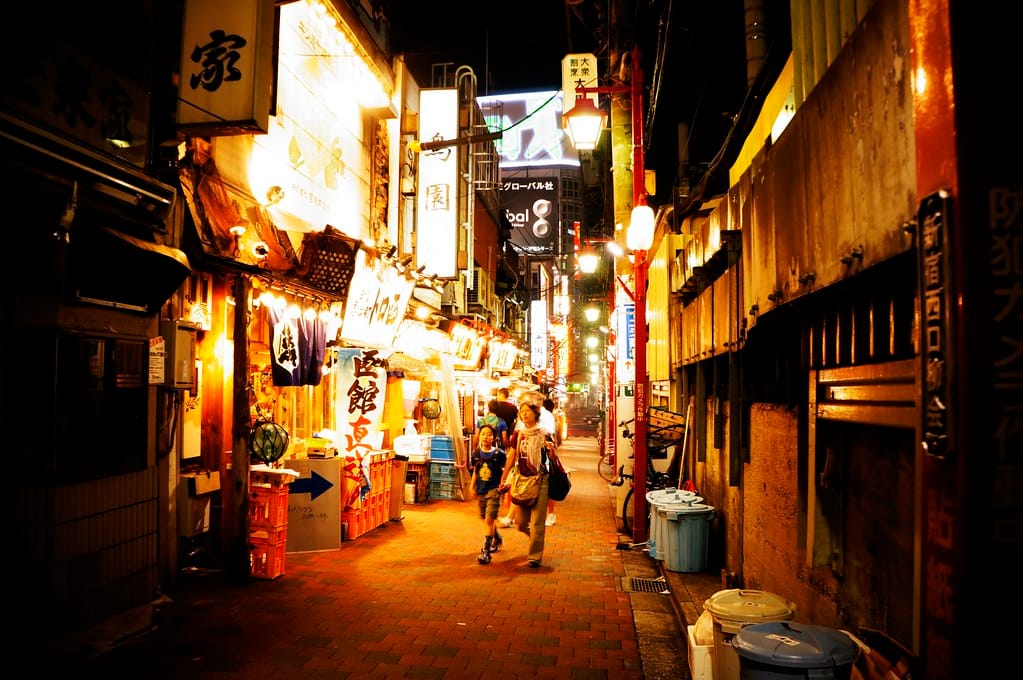
Omoide Yokocho
Post-war alley
A smoky lane of tiny grill counters by the tracks, barely changed since the 1940s. Most of the grills are meat, so walk it for the atmosphere and the photographs.
-
· S11
The giant 3D cat
Cross Shinjuku Vision, east exit
A huge cat that seems to climb out of a curved billboard. Pure Tokyo.
-
· S12
Golden Gai
Six alleys, about 200 bars
Bars that hold six to ten people each, every one a little world. Some are for regulars only; look for a sign in English.
Tip A cover charge is normal. Try two or three bars rather than one.
If it rains Nearly all of it is indoors already. Swap the garden for Sekaido, the art-supplies shop by Shinjuku-sanchome.
Day 2 · 表参道 · Harajuku · Omotesando · Shibuya
The best kilometre of modern architecture on earth
Omotesando is a free gallery of Pritzker winners. Walk it slowly and look up.
11 stops
-
· O01
Meiji Jingu
Shinto shrine, 1920
A gravel path through a planted forest to a calm cypress shrine. Go early, before the crowds.
-
· O02
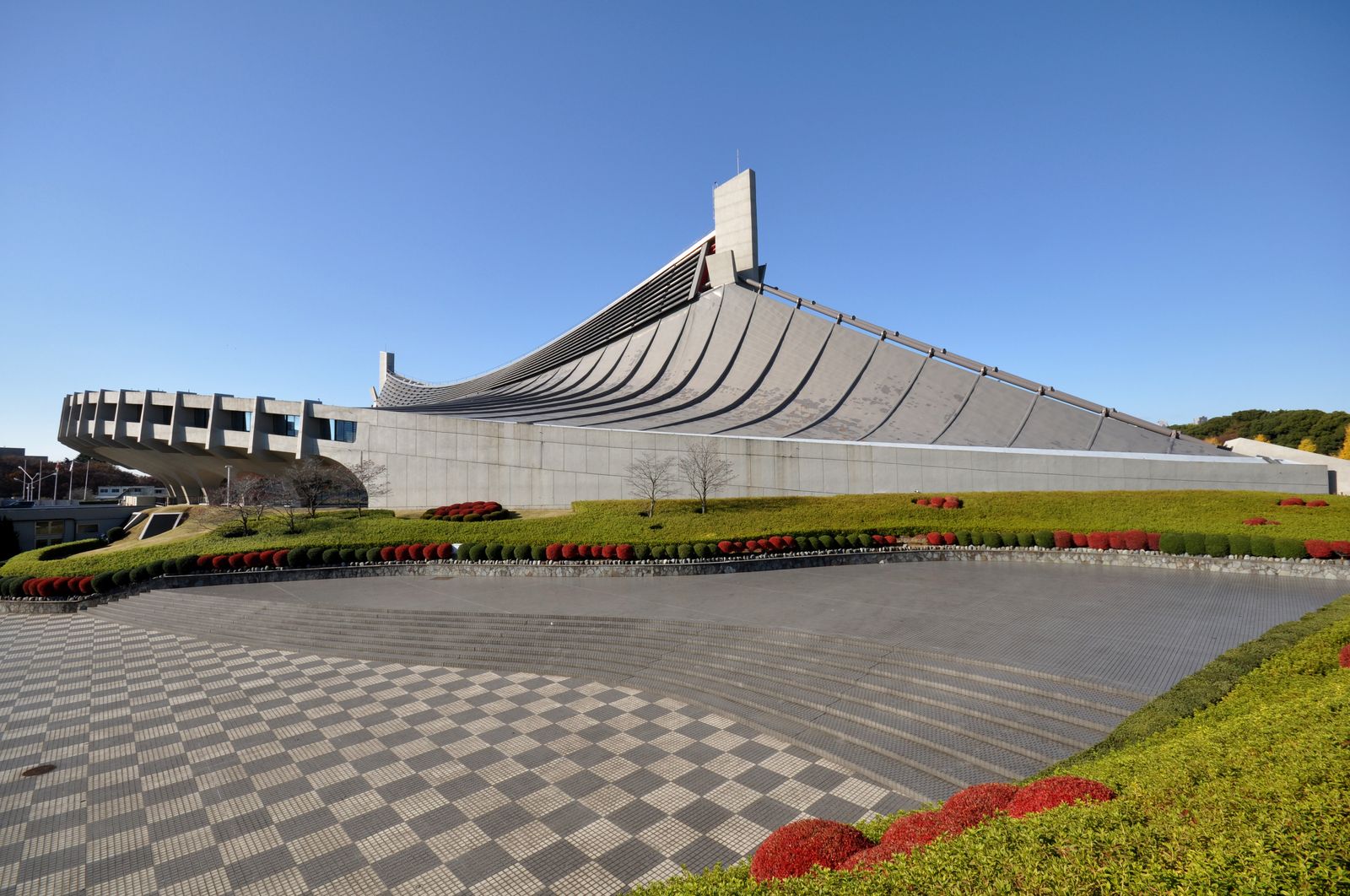
Yoyogi National Gymnasium
Kenzo Tange, 1964
The roof hangs from cables like a suspension bridge. The building most often called Tange’s masterpiece.
-
· O03
The Tokyo Toilet
Shigeru Ban, Tadao Ando, Toyo Ito, Kengo Kuma and more
Public toilets by star architects (the ones in the film Perfect Days). Ban’s glass walls go frosted when you lock the door.
Tip Ban’s are in Yoyogi-Fukamachi Mini Park and Haru-no-Ogawa Community Park.
-
· O04
Afuri Harajuku
Ramen
Light yuzu-citrus ramen, and one of the few ramen chains with a vegan bowl made from vegetable broth.
Tip Order the vegan ramen. Their usual broth is chicken.
-
· O05
The Omotesando strip
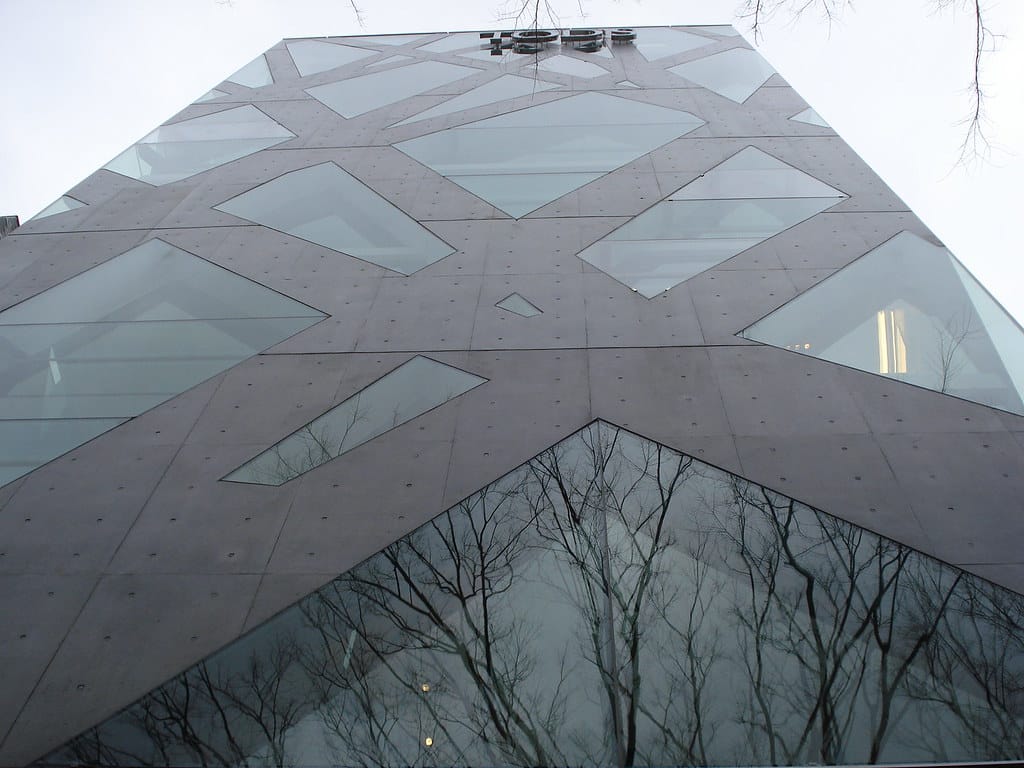
Ito · Ando · SANAA · Aoki · Herzog & de Meuron
In one walk: Tod’s (Toyo Ito), Omotesando Hills (Tadao Ando), Dior (SANAA), Louis Vuitton (Jun Aoki) and Prada’s glass diamond (Herzog & de Meuron).
Tip Prada is a short walk off the main road, in Minami-Aoyama.
-
· O06
SunnyHills Minami-Aoyama
Kengo Kuma, 2013
A pineapple-cake shop inside a basket of interlocking timber. Visitors are usually offered tea and a cake, free.
-
· O07
Nezu Museum
Kengo Kuma, 2009
You go in down a long bamboo-lined path under a huge low roof. Then wander a hilly garden of teahouses.
Tip Book a time slot online.
-
· O08
Shibuya Sky
Shibuya Scramble Square
An open-air roof 230 m up, right above the famous crossing. Book the slot that takes in the sunset.
-
· O09
Tower Records Shibuya
Record shop
A whole building of music, with Japanese pressings and city pop you won’t find at home.
-
· O10
Uobei
Sushi by bullet train
Order on a touchscreen and your plate shoots to your seat on a little rail. Fish, of course, plus cucumber rolls, inari and sweet egg.
-
· O11
JBS (Jazz Blues Soul)
Listening bar
One man, one turntable, and a wall of vinyl from floor to ceiling. Order a whisky and listen.
Tip It is tiny and quiet. Keep your voices down and your phones away.
If it rains Nezu Museum, Spiral and Shibuya’s bookshops and record shops are all indoors. Leave out the toilets and the shrine.
Day 3 · 上野・浅草 · Ueno · Ryogoku · Kuramae · Asakusa
Le Corbusier, Hokusai and old Edo
Modernist pilgrimage in the morning, the old east side by dusk. The Oedo line ties it together.
10 stops
-
· U01
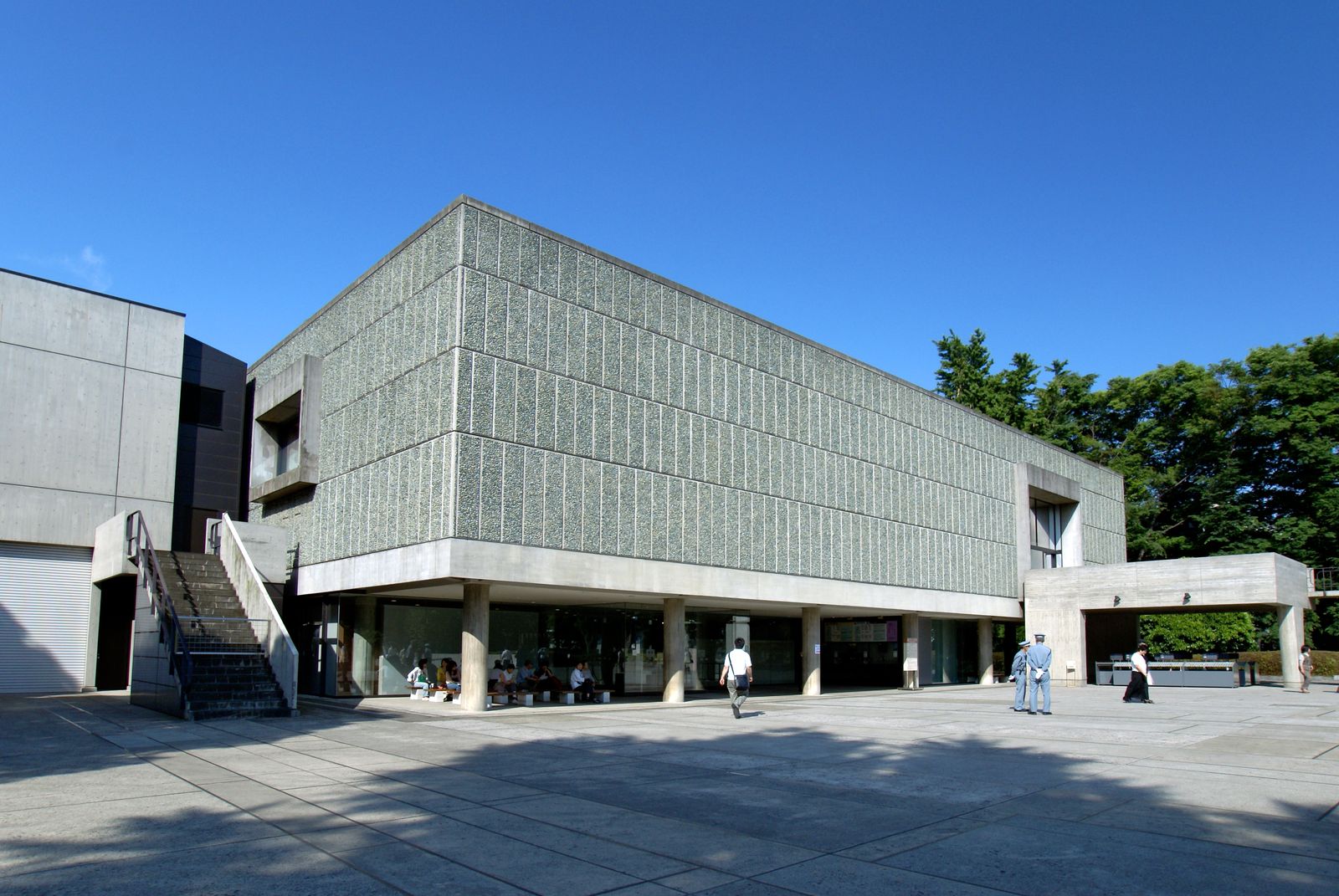
National Museum of Western Art
Le Corbusier, 1959
Le Corbusier’s only building in East Asia, and World Heritage since 2016. Look for the spiral plan and the top-lit galleries.
-
· U02
Tokyo Bunka Kaikan
Kunio Maekawa, 1961
The concert hall opposite, by Le Corbusier’s Japanese pupil. Look at the great upturned concrete eaves.
-
· U03
Gallery of Horyuji Treasures
Yoshio Taniguchi, 1999 · Tokyo National Museum
Taniguchi, who later remade MoMA, set a dark box of 7th-century treasures behind a shallow pool. Calm and perfect.
-
· U04
Ueno Yabu Soba
Soba house, since the 1890s
Cold buckwheat noodles on a bamboo tray with a dipping sauce. Simple, perfect and a short walk from the museums.
Tip Try zaru soba or vegetable tempura soba. The sauce is made with fish stock.
-
· U05
Akihabara Gachapon Kaikan
Capsule-toy shop · Akihabara
About 500 machines, chosen for the strange: miniature everyday objects, surreal animals and a corner of cheeky adult capsules. New ones arrive every month.
Tip Two stops from Ueno on the Yamanote line. Then the JR Sobu line runs two stops to Ryogoku for Hokusai.
-
· U06
Sumida Hokusai Museum
Kazuyo Sejima (SANAA), 2016
The artist behind the Great Wave, in a mirrored building cut through by footpaths. A must for the graphic designer.
-
· U07
Kakimori
Stationery · Kuramae
Pick the paper, cover, rings and clasp, and they bind your own notebook while you wait. Next door, mix your own ink at Ink Stand.
-
· U08
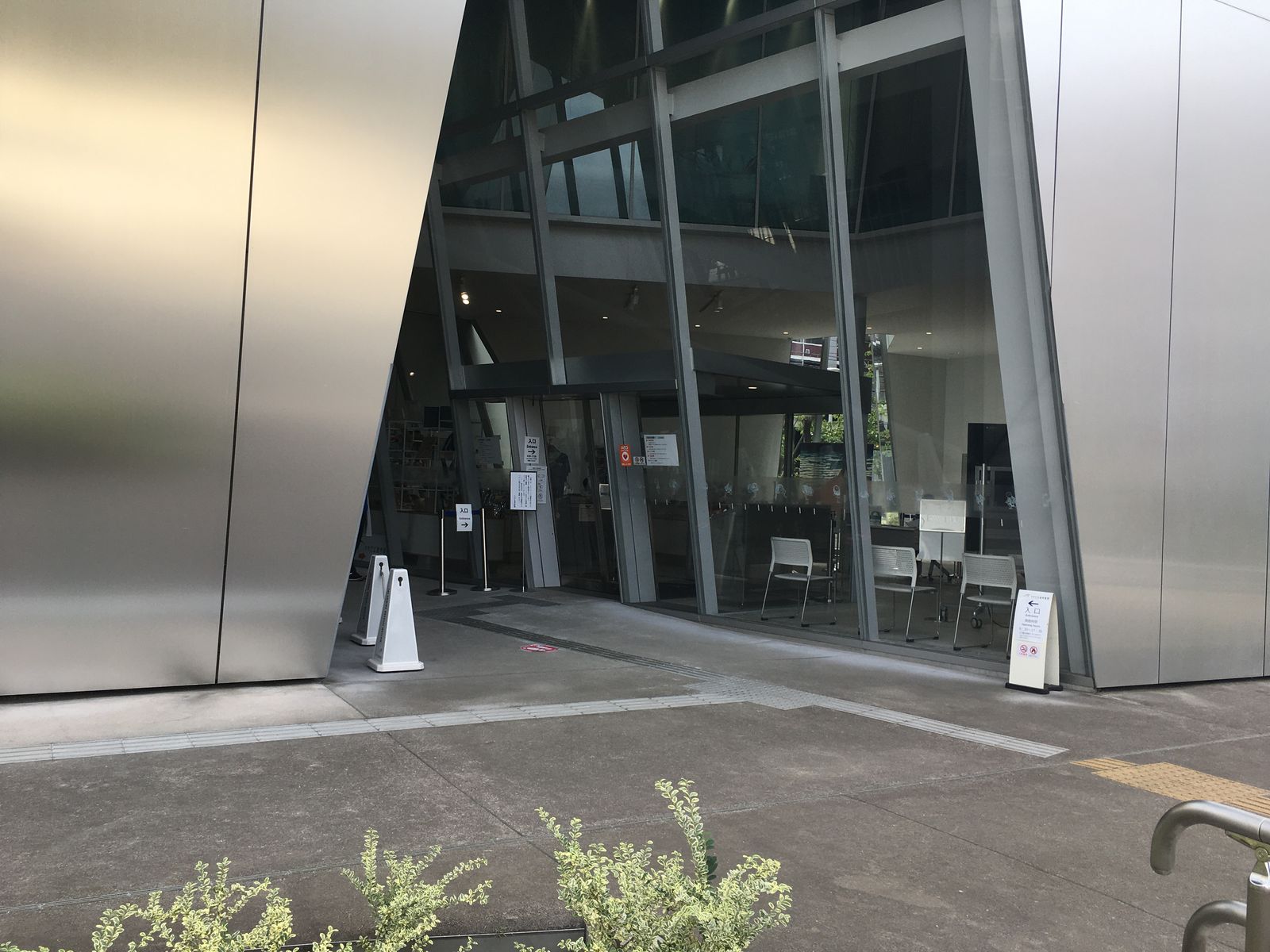
Asakusa Culture Tourist Information Center
Kengo Kuma, 2012
Eight small timber houses stacked on top of one another. The free roof terrace looks down onto Senso-ji.
Tip Go up at sunset. Across the river is Philippe Starck’s golden “flame” on the Asahi Beer Hall.
-
· U09
Senso-ji
Tokyo’s oldest temple
After dark the day-trippers leave and the gates and pagoda are lit up. It is far better than at noon.
-
· U10
Hoppy Street
Open-air izakaya row
Stools out on the pavement and cheap drinks. Order edamame, fried tofu, grilled fish and vegetable tempura, and skip the famous beef stew. Try a “Hoppy” with shochu.
If it rains The museums carry the day. Drop the walk and take the Oedo line between stops.
Day 4 · 銀座・六本木 · Tsukiji · Ginza · Roppongi
Paper, print and the Roppongi art triangle
A graphic designer’s morning in Ginza, then three big museums and a late night up high.
10 stops
-
· G01
Tsukiji Outer Market
Breakfast stalls
Tamagoyaki on a stick, a sushi breakfast, and knife shops. The tuna auction has moved, but the market streets are still here.
Tip Many stalls close by early afternoon, and some on Sundays and Wednesdays.
-
· G02
Shizuoka Press & Broadcasting Center
Kenzo Tange, 1967
A single round core with office pods hanging off it. A rare Metabolist building still standing.
Tip Kurokawa’s Nakagin Capsule Tower stood nearby until 2022. Some of its capsules survive in museums.
-
· G03
Ginza Graphic Gallery (ggg)
Dai Nippon Printing, since 1986
Free shows of graphic design, often a single great Japanese designer at a time. Check what is on before you go.
-
· G04
Ginza Itoya
Stationery, since 1904
A tall, slim tower of paper, pens and cards, with a floor just for paper. You can make your own notepad.
-
· G05
Tsutaya Books at Ginza Six, and Muji Ginza
Art books · Muji flagship
Huge art and photography books under a high wooden ceiling. Then Muji’s flagship, with a Muji diner and even a Muji hotel.
Tip Lunch at the Muji diner, or from the food halls in the basements of the Ginza department stores.
-
· G06
Tokyo International Forum
Rafael Viñoly, 1996
A glass hall shaped like a ship’s hull, with walkways slung across it. Free to walk through.
-
· G07
21_21 Design Sight
Tadao Ando with Issey Miyake, 2007
A roof folded from a single sheet of steel, after Miyake’s “a piece of cloth”. The design shows downstairs are always good.
-
· G08
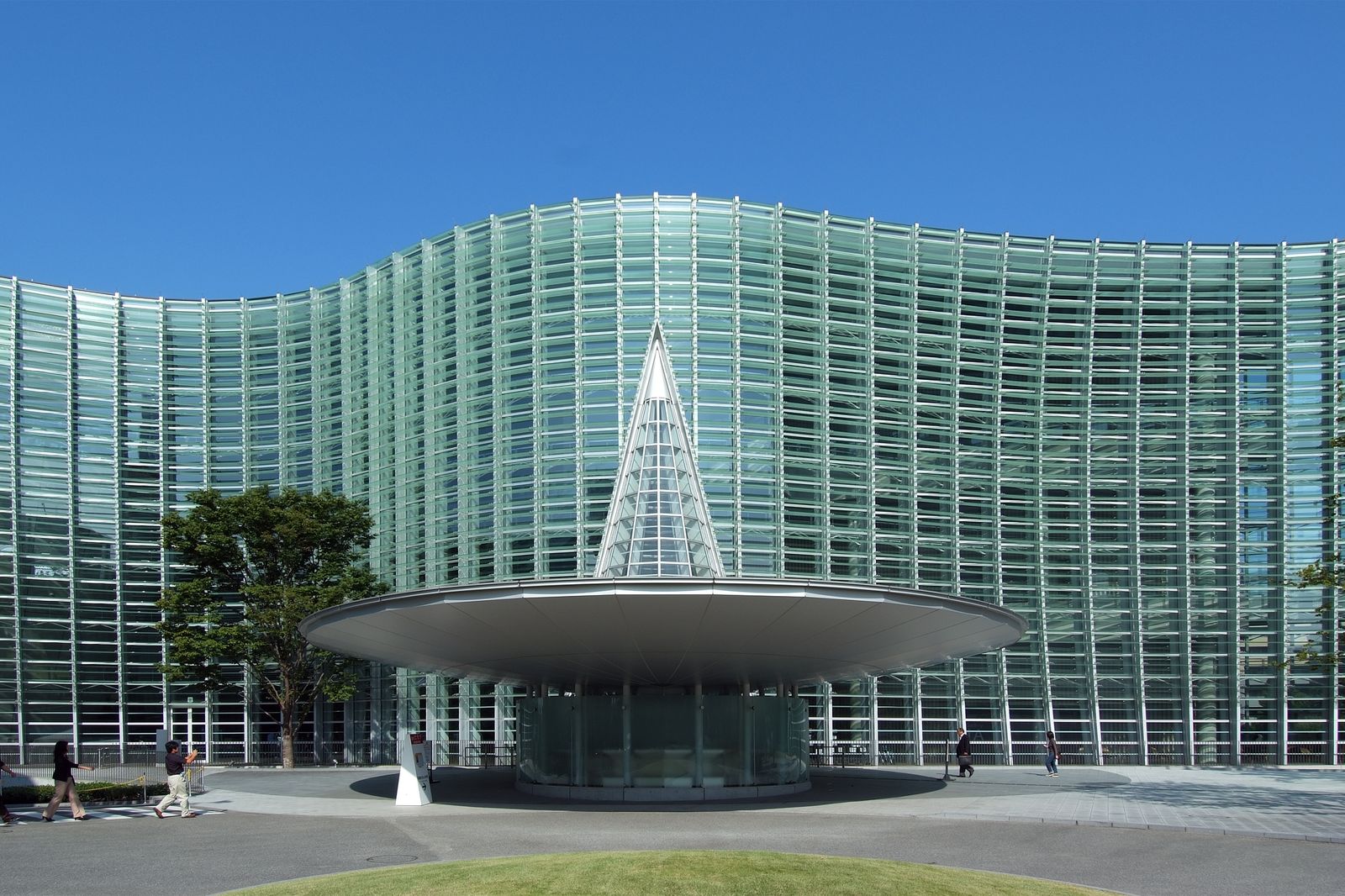
National Art Center, Tokyo
Kisho Kurokawa, 2007
A rippling glass wall, with a café perched on top of an upturned concrete cone. It has no collection of its own, only big shows.
-
· G09
Gonpachi Nishi-Azabu
Izakaya
The wooden hall said to have inspired the House of Blue Leaves fight in Kill Bill. Soba, vegetable tempura and a lot of noise.
-
· G10
Mori Art Museum and Tokyo City View
Roppongi Hills, 53rd floor
Big contemporary art shows, open late most nights. Then the whole lit city around you.
Tip Or book teamLab Borderless at Azabudai Hills, in Heatherwick Studio’s new district, for the same slot.
If it rains Itoya, the galleries and the museums are all indoors. Take the metro between Ginza and Roppongi.
Day 5 · 下北沢 · Daikanyama · Nakameguro · Shimokitazawa
Bookshops, vintage, vinyl and a live house
The slow, low-rise west side, where young Tokyo shops, eats and plays. A good last day.
8 stops
-
· D01
Daikanyama T-Site
Klein Dytham Architecture, 2011
Three pavilions wrapped in a lattice of interlocking “T”s, full of books and magazines. Upstairs, the Anjin lounge has old magazines to read with coffee.
-
· D02
Hillside Terrace
Fumihiko Maki, 1969–1998
Maki added to this one quiet street for thirty years. Low white buildings, galleries and courtyards: a lesson in town planning.
-
· D03
Starbucks Reserve Roastery Tokyo
Kengo Kuma, 2019
Yes, Starbucks. But inside, a four-storey copper roasting tank rises under a ceiling of folded cedar, by the Meguro river.
-
· D04
Cow Books
Nakameguro
A tiny secondhand shop of carefully chosen books, many on 1960s counterculture.
-
· D05
Shimokitazawa
Vintage and records
Lanes of vintage clothes and small record shops. Find Flash Disc Ranch, a famously cramped record shop up a flight of stairs.
-
· D06
Bonus Track
Tsubame Architects, 2020
Low shop-houses built on an old railway line: a bookshop, a pickle shop and craft beer. A small model of how a city can grow.
-
· D07
Vegetarian curry
CoCo Ichibanya, any branch
Japanese curry roux usually hides meat stock. CoCo Ichibanya, the big curry chain, has a meat-free vegetarian menu: pick your spice level and toppings.
-
· D08
A Shimokita live house
Shelter · Basement Bar · Three
Small basement venues where Japanese indie bands play most nights. Buy a ticket on the door and a compulsory drink.
If it rains T-Site, the Roastery and Shimokita’s shops are under cover. Leave out the river walk.
Every place in one list
Filter by what you love, and save the extras you want
The ones marked “Extra” aren’t on any day. Swap them in when a plan doesn’t suit.
74 places
-
Day 1 · S01
Godzilla, and Kabukicho Tower
Hotel Gracery · Yuko Nagayama, 2023
Start on your doorstep. Godzilla glowers over the hotel terrace, and next door Nagayama’s tower wears a glass skin modelled on a splash of water.
-
Day 1 · S02
Tokyo Metropolitan Government Building
Kenzo Tange, 1991
Tange’s Gothic-cathedral city hall. The free observation deck on the 45th floor looks out to Mount Fuji on a clear morning.
-
Day 1 · S03
Mode Gakuen Cocoon Tower
Tange Associates, 2008
A fashion and design school wrapped in a crisscross white web. It is best seen from the foot of the tower, looking straight up.
-
Day 1 · S04
Gashapon Department Store, Ikebukuro
Bandai Namco Cross Store Tokyo · Sunshine City
Guinness confirmed it in June 2026 as the world’s biggest capsule-toy shop: 4,096 machines, wall after wall. Bring a fistful of ¥100 coins (there are change machines).
-
Day 1 · S05
Ain Soph. Journey
Vegan · Shinjuku 3-chome
An all-vegan café near the garden gates, famous for its fluffy “heavenly” pancakes. An easy first meal.
-
Day 1 · S06
Shinjuku Gyoen
National garden
French, English and Japanese gardens in one, plus a modern glass greenhouse. The best place to fight off jet lag on a bench.
-
Day 1 · S07
Ichigaya Letterpress Factory
Dai Nippon Printing · building of 1926
DNP’s old print works, restored and full of working presses, cases of metal type and the punches used to cut Japanese characters. Free, and a quiet joy for a graphic designer.
-
Day 1 · S08
Kinokuniya Shinjuku
Bookshop, since 1927
Tokyo’s grand old bookshop. Head for the art, design and architecture shelves and the Japanese magazines.
-
Day 1 · S09
Tsunahachi
Tempura, since 1924
Crisp tempura fried in front of you at the counter: aubergine, sweet potato, shiitake, prawn and white fish.
-
Day 1 · S10
Omoide Yokocho
Post-war alley
A smoky lane of tiny grill counters by the tracks, barely changed since the 1940s. Most of the grills are meat, so walk it for the atmosphere and the photographs.
-
Day 1 · S11
The giant 3D cat
Cross Shinjuku Vision, east exit
A huge cat that seems to climb out of a curved billboard. Pure Tokyo.
-
Day 1 · S12
Golden Gai
Six alleys, about 200 bars
Bars that hold six to ten people each, every one a little world. Some are for regulars only; look for a sign in English.
-
Day 2 · O01
Meiji Jingu
Shinto shrine, 1920
A gravel path through a planted forest to a calm cypress shrine. Go early, before the crowds.
-
Day 2 · O02
Yoyogi National Gymnasium
Kenzo Tange, 1964
The roof hangs from cables like a suspension bridge. The building most often called Tange’s masterpiece.
-
Day 2 · O03
The Tokyo Toilet
Shigeru Ban, Tadao Ando, Toyo Ito, Kengo Kuma and more
Public toilets by star architects (the ones in the film Perfect Days). Ban’s glass walls go frosted when you lock the door.
-
Day 2 · O04
Afuri Harajuku
Ramen
Light yuzu-citrus ramen, and one of the few ramen chains with a vegan bowl made from vegetable broth.
-
Day 2 · O05
The Omotesando strip
Ito · Ando · SANAA · Aoki · Herzog & de Meuron
In one walk: Tod’s (Toyo Ito), Omotesando Hills (Tadao Ando), Dior (SANAA), Louis Vuitton (Jun Aoki) and Prada’s glass diamond (Herzog & de Meuron).
-
Day 2 · O06
SunnyHills Minami-Aoyama
Kengo Kuma, 2013
A pineapple-cake shop inside a basket of interlocking timber. Visitors are usually offered tea and a cake, free.
-
Day 2 · O07
Nezu Museum
Kengo Kuma, 2009
You go in down a long bamboo-lined path under a huge low roof. Then wander a hilly garden of teahouses.
-
Day 2 · O08
Shibuya Sky
Shibuya Scramble Square
An open-air roof 230 m up, right above the famous crossing. Book the slot that takes in the sunset.
-
Day 2 · O09
Tower Records Shibuya
Record shop
A whole building of music, with Japanese pressings and city pop you won’t find at home.
-
Day 2 · O10
Uobei
Sushi by bullet train
Order on a touchscreen and your plate shoots to your seat on a little rail. Fish, of course, plus cucumber rolls, inari and sweet egg.
-
Day 2 · O11
JBS (Jazz Blues Soul)
Listening bar
One man, one turntable, and a wall of vinyl from floor to ceiling. Order a whisky and listen.
-
Day 3 · U01
National Museum of Western Art
Le Corbusier, 1959
Le Corbusier’s only building in East Asia, and World Heritage since 2016. Look for the spiral plan and the top-lit galleries.
-
Day 3 · U02
Tokyo Bunka Kaikan
Kunio Maekawa, 1961
The concert hall opposite, by Le Corbusier’s Japanese pupil. Look at the great upturned concrete eaves.
-
Day 3 · U03
Gallery of Horyuji Treasures
Yoshio Taniguchi, 1999 · Tokyo National Museum
Taniguchi, who later remade MoMA, set a dark box of 7th-century treasures behind a shallow pool. Calm and perfect.
-
Day 3 · U04
Ueno Yabu Soba
Soba house, since the 1890s
Cold buckwheat noodles on a bamboo tray with a dipping sauce. Simple, perfect and a short walk from the museums.
-
Day 3 · U05
Akihabara Gachapon Kaikan
Capsule-toy shop · Akihabara
About 500 machines, chosen for the strange: miniature everyday objects, surreal animals and a corner of cheeky adult capsules. New ones arrive every month.
-
Day 3 · U06
Sumida Hokusai Museum
Kazuyo Sejima (SANAA), 2016
The artist behind the Great Wave, in a mirrored building cut through by footpaths. A must for the graphic designer.
-
Day 3 · U07
Kakimori
Stationery · Kuramae
Pick the paper, cover, rings and clasp, and they bind your own notebook while you wait. Next door, mix your own ink at Ink Stand.
-
Day 3 · U08
Asakusa Culture Tourist Information Center
Kengo Kuma, 2012
Eight small timber houses stacked on top of one another. The free roof terrace looks down onto Senso-ji.
-
Day 3 · U09
Senso-ji
Tokyo’s oldest temple
After dark the day-trippers leave and the gates and pagoda are lit up. It is far better than at noon.
-
Day 3 · U10
Hoppy Street
Open-air izakaya row
Stools out on the pavement and cheap drinks. Order edamame, fried tofu, grilled fish and vegetable tempura, and skip the famous beef stew. Try a “Hoppy” with shochu.
-
Day 4 · G01
Tsukiji Outer Market
Breakfast stalls
Tamagoyaki on a stick, a sushi breakfast, and knife shops. The tuna auction has moved, but the market streets are still here.
-
Day 4 · G02
Shizuoka Press & Broadcasting Center
Kenzo Tange, 1967
A single round core with office pods hanging off it. A rare Metabolist building still standing.
-
Day 4 · G03
Ginza Graphic Gallery (ggg)
Dai Nippon Printing, since 1986
Free shows of graphic design, often a single great Japanese designer at a time. Check what is on before you go.
-
Day 4 · G04
Ginza Itoya
Stationery, since 1904
A tall, slim tower of paper, pens and cards, with a floor just for paper. You can make your own notepad.
-
Day 4 · G05
Tsutaya Books at Ginza Six, and Muji Ginza
Art books · Muji flagship
Huge art and photography books under a high wooden ceiling. Then Muji’s flagship, with a Muji diner and even a Muji hotel.
-
Day 4 · G06
Tokyo International Forum
Rafael Viñoly, 1996
A glass hall shaped like a ship’s hull, with walkways slung across it. Free to walk through.
-
Day 4 · G07
21_21 Design Sight
Tadao Ando with Issey Miyake, 2007
A roof folded from a single sheet of steel, after Miyake’s “a piece of cloth”. The design shows downstairs are always good.
-
Day 4 · G08
National Art Center, Tokyo
Kisho Kurokawa, 2007
A rippling glass wall, with a café perched on top of an upturned concrete cone. It has no collection of its own, only big shows.
-
Day 4 · G09
Gonpachi Nishi-Azabu
Izakaya
The wooden hall said to have inspired the House of Blue Leaves fight in Kill Bill. Soba, vegetable tempura and a lot of noise.
-
Day 4 · G10
Mori Art Museum and Tokyo City View
Roppongi Hills, 53rd floor
Big contemporary art shows, open late most nights. Then the whole lit city around you.
-
Day 5 · D01
Daikanyama T-Site
Klein Dytham Architecture, 2011
Three pavilions wrapped in a lattice of interlocking “T”s, full of books and magazines. Upstairs, the Anjin lounge has old magazines to read with coffee.
-
Day 5 · D02
Hillside Terrace
Fumihiko Maki, 1969–1998
Maki added to this one quiet street for thirty years. Low white buildings, galleries and courtyards: a lesson in town planning.
-
Day 5 · D03
Starbucks Reserve Roastery Tokyo
Kengo Kuma, 2019
Yes, Starbucks. But inside, a four-storey copper roasting tank rises under a ceiling of folded cedar, by the Meguro river.
-
Day 5 · D04
Cow Books
Nakameguro
A tiny secondhand shop of carefully chosen books, many on 1960s counterculture.
-
Day 5 · D05
Shimokitazawa
Vintage and records
Lanes of vintage clothes and small record shops. Find Flash Disc Ranch, a famously cramped record shop up a flight of stairs.
-
Day 5 · D06
Bonus Track
Tsubame Architects, 2020
Low shop-houses built on an old railway line: a bookshop, a pickle shop and craft beer. A small model of how a city can grow.
-
Day 5 · D07
Vegetarian curry
CoCo Ichibanya, any branch
Japanese curry roux usually hides meat stock. CoCo Ichibanya, the big curry chain, has a meat-free vegetarian menu: pick your spice level and toppings.
-
Day 5 · D08
A Shimokita live house
Shelter · Basement Bar · Three
Small basement venues where Japanese indie bands play most nights. Buy a ticket on the door and a compulsory drink.
-
Extra · Mitaka
Ghibli Museum
Hayao Miyazaki
Miyazaki designed it himself: spiral stairs, a rooftop robot and a short film you can only see here. 15 minutes from Shinjuku.
-
Extra · Azabudai Hills
teamLab Borderless
Art collective teamLab
Rooms of digital art with no walls between the works. They flow from one room into the next.
-
Extra · Shinjuku
Sekaido
Art supplies
Floors of markers, papers, inks and brushes, at prices that sting less than at home.
-
Extra · Nakano
Nakano Broadway
1960s shopping arcade
Four floors of vintage toys, manga, cels and odd tiny shops. Four minutes from Shinjuku by train.
-
Extra · Jimbocho
Jimbocho book town
Streets of secondhand bookshops
Old prints, art books and posters, and good old coffee shops in between.
-
Extra · Iidabashi
Printing Museum, Tokyo
Toppan
The history of printing, with a working letterpress studio where you can set type.
-
Extra · Tennozu Isle
WHAT museum and its model store
Warehouse of Art Terrada
A warehouse full of architects’ models, from rough card studies to finished masterpieces. An architect’s dream.
-
Extra · Koganei
Edo-Tokyo Open Air Architectural Museum
Including Kunio Maekawa’s own house
Old Tokyo houses, shops and a bathhouse rebuilt in a park. Maekawa’s 1942 house is the star.
-
Extra · Marunouchi
Tokyo Station and KITTE
Tatsuno Kingo, 1914 · Kengo Kuma
The red-brick station, restored, seen from the free roof garden of the KITTE post-office building across the road.
-
Extra · Kiyosumi-Shirakawa
Museum of Contemporary Art Tokyo
Kiyosumi-Shirakawa
Tokyo’s big modern art museum, in a quiet coffee district. Blue Bottle opened its first Japanese café here.
-
Extra · Setagaya
Gotokuji
Temple of the beckoning cat
Rows upon rows of little white beckoning cats left by visitors. Strange and lovely.
-
Extra · Meguro
Meguro Parasitological Museum
Tiny and free
Parasites in jars, including an 8.8 m tapeworm. The gift shop’s T-shirts are a design classic.
-
Extra · Koenji
Kosugiyu
Public bath, since 1933
A classic temple-roofed sento. Wash first, then soak. A real slice of daily Tokyo.
-
Extra · Shinjuku
Shinjuku Pit Inn
Jazz club, since 1965
Tokyo’s best-known jazz basement, a few minutes from the hotel. There are cheaper afternoon sets.
-
Extra · Shinjuku
Disk Union Shinjuku
Record shops
A cluster of shops, each for one kind of music. The jazz and Japanese shops are the best.
-
Extra · Aoyama
Blue Note Tokyo
Jazz club
World-class players in a smart room. Dress up a little.
-
Extra · Asakusa
Kappabashi Dogu Street
Kitchen street
Knives, ceramics and the plastic food you see in restaurant windows. Some shops run workshops where you make your own.
-
Extra · Yanaka
Kayaba Coffee
Coffee shop since 1938
A restored wooden coffee shop in old Yanaka. Have the egg sandwich.
-
Extra · Ginza
Café de L’Ambre
Coffee only, since 1948
Dark wood, aged beans and coffee made one cup at a time. Time stopped here decades ago.
-
Extra · Shinjuku
Isetan food hall
Department store basement
Perfect fruit, bento and cakes, all wrapped beautifully. A museum of packaging.
-
Extra · Tokyo Station
T’s TanTan
Vegan ramen
Sesame tantan noodles with no animal products at all. The vegan ramen Tokyo is known for.
-
Extra · Shiba Park
Tofuya Ukai
Tofu restaurant
Course after course of handmade tofu in a garden at the foot of Tokyo Tower. A splurge meal.
-
Extra · Atago
Daigo
Shojin ryori
Buddhist temple cooking: fully vegan, seasonal and beautiful. A once-in-a-lifetime meal at a once-in-a-lifetime price.
Nothing matches those filters. Try fewer, or press Show all.
Eat
Twelve meat-free things to eat before you leave
Every one is vegetarian, or vegetarian plus fish. You have eaten 0 of 12.
See it like a designer
Tokyo’s best design is in its everyday details
- Look downEach ward has its own manhole cover art. Some are in colour.
- Look upShop signs stack up the sides of buildings, a wall of type in three scripts.
- Look closerWrapping in a department store is a craft: folded, taped, perfect.
- ListenEach station has its own short tune that plays before the train leaves.
Design bingo: make a line
A few words
Ten phrases cover nearly everything
Press Show to fill the screen with the Japanese, then hold your phone up to whoever you’re talking to.
- SumimasenExcuse me / sorry / waiter!すみません
- Arigatō gozaimasuThank you very muchありがとうございます
- Kore o kudasaiThis one, pleaseこれをください
- Eigo no menyū wa arimasu ka?Is there an English menu?英語のメニューはありますか?
- Futari desuTwo people二人です
- Okaikei onegaishimasuThe bill, pleaseお会計お願いします
- Shashin o totte mo ii desu ka?May I take a photo?写真を撮ってもいいですか?
- Kanpai!Cheers!乾杯!
- Watashi-tachi wa bejitarian desu. Niku wa tabemasen.We are vegetarian. We don’t eat meat.私たちはベジタリアンです。肉は食べません。
- Niku ya niku no dashi wa haitte imasu ka?Is there any meat or meat stock in this?肉や肉のだしは入っていますか?
Good to know
Tokyo is easy if you know six things
Before you fly
Fourteen things to sort out at home
0 of 14 done. Ticks are saved on this phone.